What I Found When I Went Looking For My Roots
“Have you ever wondered how life might have turned out if your ancestors had never left China?”
It's a question that occasionally surfaces whenever people compare Malaysia and China today. Yet despite those comparisons, I have never seriously questioned where I belong.
I was born here. I was raised here. I am proud to be Malaysian.
My ancestors may have come from China, but Malaysia is home.
Like any country, Malaysia has its flaws and areas that need improvement. Perhaps that is why each generation has a role to play in shaping and building nation together.
These thoughts accompanied me during my recent visit to the Malaysian Chinese Museum.
Prior to that, I had visited the Johor Bahru Chinese Heritage Museum, which introduced the stories of the major dialect groups such as Hokkien, Teochew, Hakka, and Cantonese. If that museum felt like a chapter, the Malaysian Chinese Museum felt like the entire book.
It traces the journey of generations who left southern China in search of opportunities and eventually made Malaya their home.
Yet the story was far from romantic.
Many laboured as coolies under harsh conditions. Some fell into victims opium addiction, gambling and other vices, unable to send their hard-earned money back home as they had once hoped.
Standing before those exhibits, I found myself thinking about my great-grandfather, whom I never had the chance to meet.
My father often shares how his grandfather would bring him dim sum beneath the shades of the trees. Those simple moments became some of his happiest childhood memories.
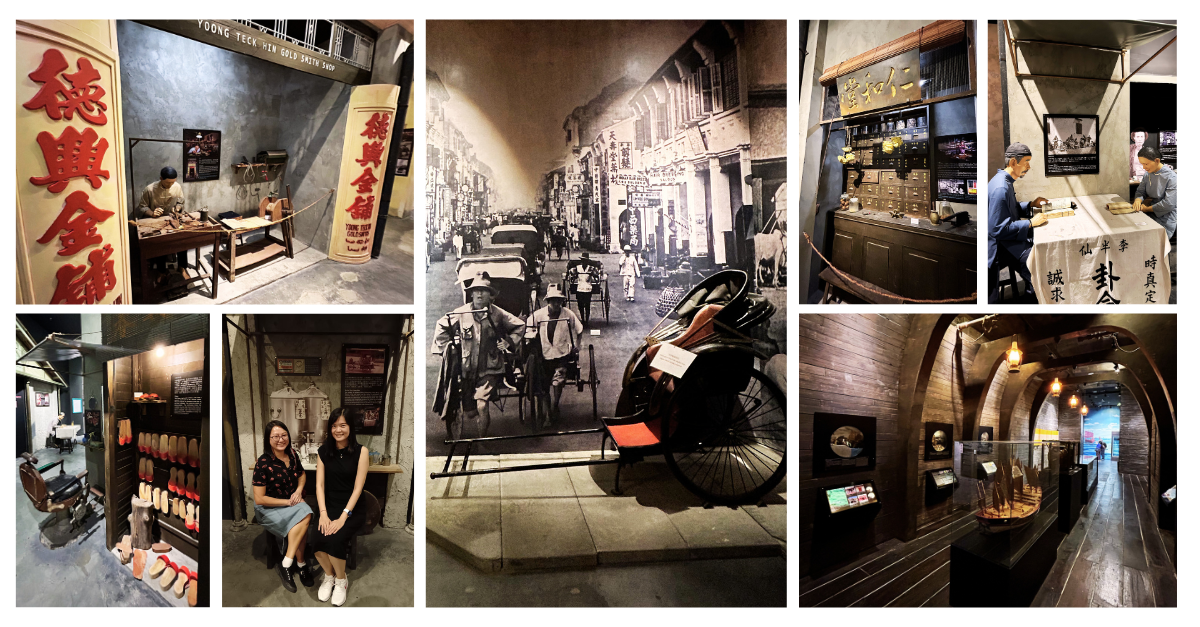
Seeing the displays on opium addiction made me wonder whether previous generations also sought ways to escape life's hardships.
Perhaps every generation has its own form of escapism.
For some, it was opium.
For ours, perhaps it is endless doomscrolling on social media, consuming hours that could otherwise be spent on more meaningful pursuits.
What struck me most about the museum, however, was that the Malaysian Chinese history has never been shaped by Chinese alone.
Among the founder patrons and contributors, one name that caught my attention was Dr. Tan Tat Chin, JSM. Surrounded by a sea of distinguished businessmen, she stood out as the only woman represented. Her lifelong contributions to Chinese education and culture earned her a place among those remembered for helping to preserve the community's heritage.
Another figure was K.S. Karthigasan, a Malaysian Indian businessman and philanthropist who became the first and only Malaysian Indian Permanent Honorary Advisor and founder patron of Huazong after contributing towards the construction of Wisma Huazong.
His presence served as a reminder that communities are not built solely by people of the same ethnicity.
They are built by people who share the same values and aspirations.
Perhaps that is what being Malaysian has always meant.
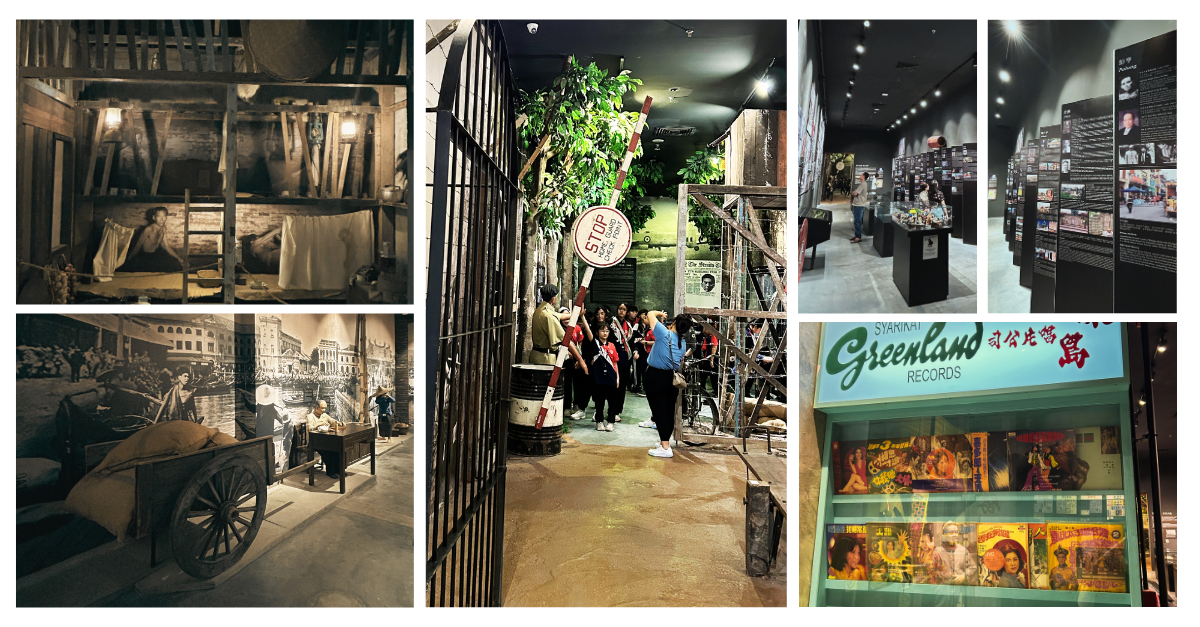
What surprised me most, however, was how alive the museum felt.
History had been my least favourite subject in school. Yet motion-activated lights, background music and life-sized scenes depicting traditional occupations transformed what could have been static displays into vivid stories.
It felt less reading about history and more like stepping into it.
Of course, not all chapters were pleasant.
The Japanese Occupation and the May 13 tragedy remain painful chapters in the nation's past. Yet perhaps understanding these difficult chapters is equally important if we are to appreciate the peace and stability that many Malaysians enjoy today.
One discovery that fascinated me was learning that Kwong Wah Yit Poh, founded by Sun Yat-sen in Penang in 1910, remain the oldest surviving Chinese daily newspaper in the world.
As someone who enjoys storytelling, I found it remarkable that a newspaper established more than a century ago continues to survive in an era increasingly dominated by digital platforms and short attention spans.
Towards the end of the museum, I found myself admiring old records and antiques that have become increasingly rare.
Today, we stream music effortlessly on Spotify and wireless earbuds. In earlier times, people gathered around records and gramophones.
Modern convenience versus historical nostalgia.
Perhaps there is room to appreciate both.
What I found particularly heartening was seeing different generations sharing the same space.
One the day of our visit, there was a group of primary school students from Johor alongside elderly visitors taking their time through galleries.
It struck me that whatever sacrifices previous generations had made to preserve the stories had not gone in vain.
Walking through the museum, I realised that understanding our roots is not about longing for another homeland, nor it is about romanticising the past.
It is about appreciating the sacrifices that brought us here, understanding the identities we inherited, and recognising that being Malaysian Chinese is ultimately inseparable from being Malaysian.
And perhaps that is something worth remembering, regardless of which generation we belong to.