The City I Thought I Knew
I thought I knew Kuala Lumpur, but I didn't.
Ironically, it took a bank's marketing campaign to make me realise that.
Like many people who live and work in the city, I had grown used to its skyline, traffic congestion and daily routines. Familiarity has a way of making us overlook what is right in front of us.
That changed when I joined OCBC Malaysia's "Our Hood, Our Heritage" initiative, which encouraged participants to explore several locations around the city centre.
What began as a simple challenge became an unexpected reminder that Kuala Lumpur still has stories hiding in plain sight.
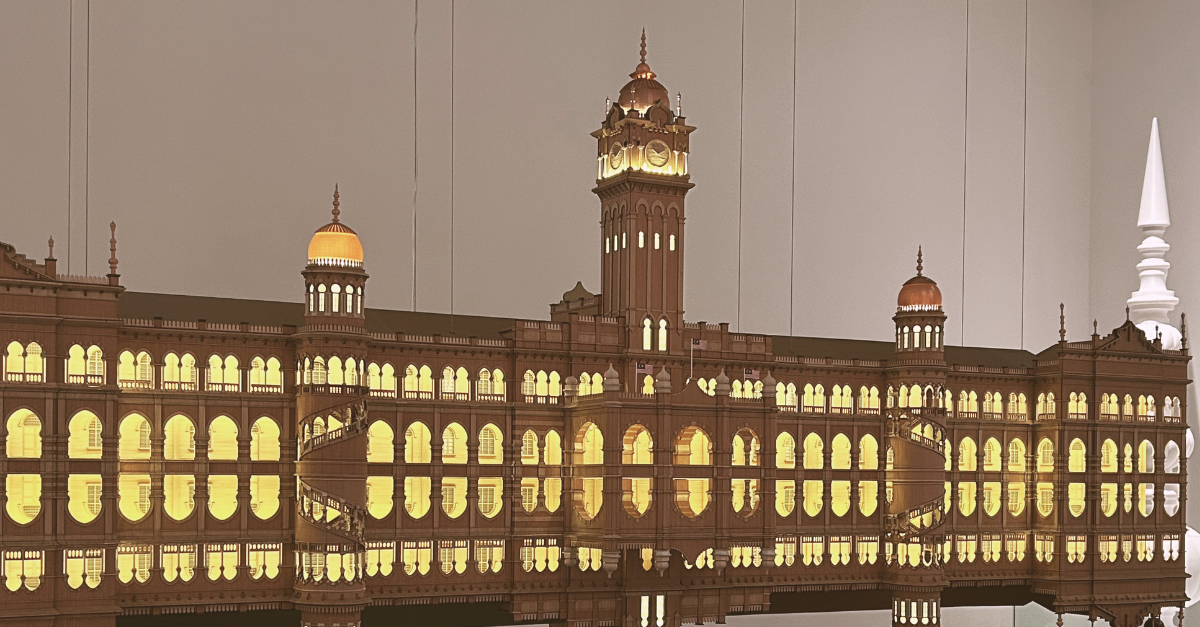
One of the stops brought me to Bangunan Sultan Abdul Samad.
Stepping inside, I realised how little I actually knew about the city I thought I knew so well.
Do you know how Kuala Lumpur got its name?
Derived from the Malay words "kuala" (river confluence) and "lumpur" (mud), the city's identity began not with skyscrapers or shopping malls, but with a muddy meeting point between the Klang and Gombak rivers.
One exhibit showcased traditional Orang Asli dwellings, a reminder that the story of Kuala Lumpur did not begin with railways, commerce or modern development. Long before the city emerged, communities were already adapting to the rivers, forests and tropical environment that shaped this region.
Another exhibit that caught my attention was the "Merdeka" (independence) installation. More than a tribute to independence, it served as a reminder that nation-building involved many individuals, communities and generations. Across different eras, miners, traders, migrants, civil servants and community leaders all contributed to Kuala Lumpur's growth.
As I climbed the spiral staircase overlooking Dataran Merdeka, I found myself looking at familiar surroundings from a different vantage point. Perhaps that was the theme of the day itself: seeing the city through fresh eyes.
Standing in the restored courtyard, I looked up and saw Merdeka 118 rising beyond the historic arches. It felt symbolic. Kuala Lumpur is often presented as a city racing towards the future, yet its past remains visible if we take the time to look.
Heritage preservation is not simply about keeping old buildings standing. It requires ongoing maintenance, expertise, funding and public access. Many visitors admire Bangunan Sultan Abdul Samad from the outside without considering what it takes to preserve a landmark that has stood for more than a century.
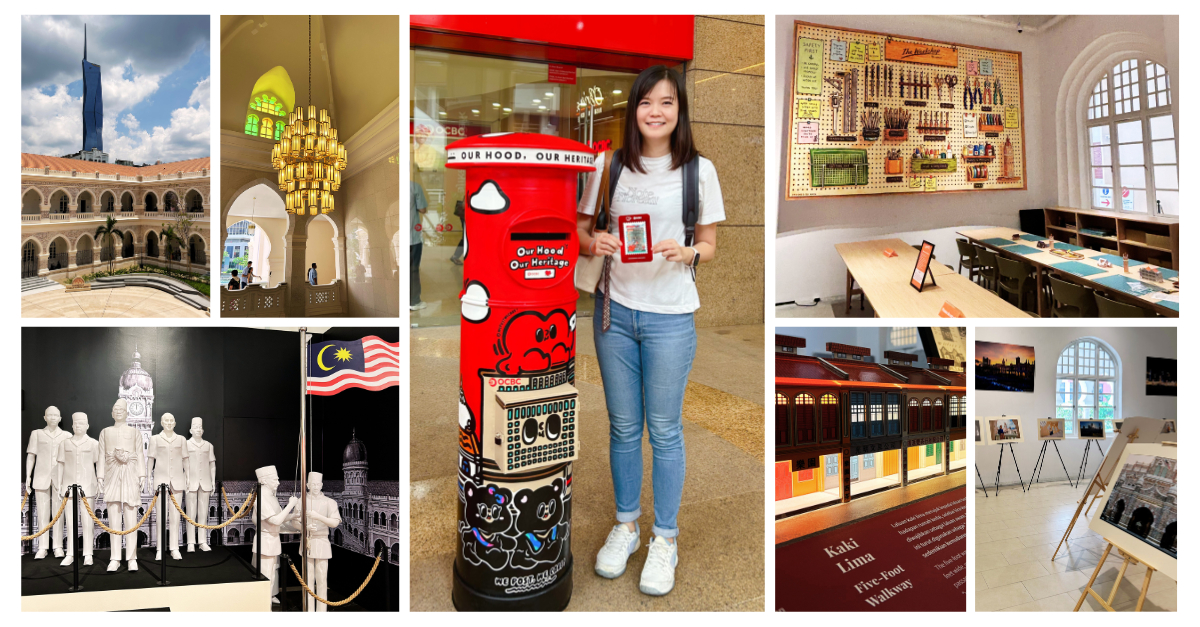
What impressed me was that the building is more than a preserved landmark. Spaces within it now host workshops, exhibitions and educational activities, allowing heritage to remain relevant to newer generations.
Even architectural features that many of us take for granted, such as the five-foot way found in traditional shophouses, reflected how communities adapted public and commercial spaces to everyday life.
Outside the building, the River of Life project brought the story full circle. After learning how Kuala Lumpur emerged from the confluence of two rivers, I found myself standing beside the very waterways that gave the city its name.
The rediscovery did not end there. Along the River of Life and even during my LRT journey home, murals and information panels continued telling the story of how Kuala Lumpur evolved from a muddy mining settlement into the capital city we know today.
As I continued the heritage trail, I found myself seeing the city differently. Beyond the historic buildings were local businesses, cafés and community spaces that contribute to Kuala Lumpur's character today. From the bustling streets around Masjid Jamek and Medan Pasar to independent cafés tucked within older neighbourhoods, each stop revealed another layer of the city.
What struck me most was not the architecture, the cafés or even the challenge itself.
It was the realisation that we often travel across countries searching for new experiences while overlooking the stories in our own backyard.
Kuala Lumpur is often associated with the Petronas Twin Towers, shopping malls and modern skyscrapers. Yet beyond them lies another side of the city, shaped by heritage buildings, community spaces, local businesses and the people who continue to keep these places alive.
Sometimes, all it takes is a reason to slow down.
And when we do, we may discover that the city we thought we knew still has stories left to tell.